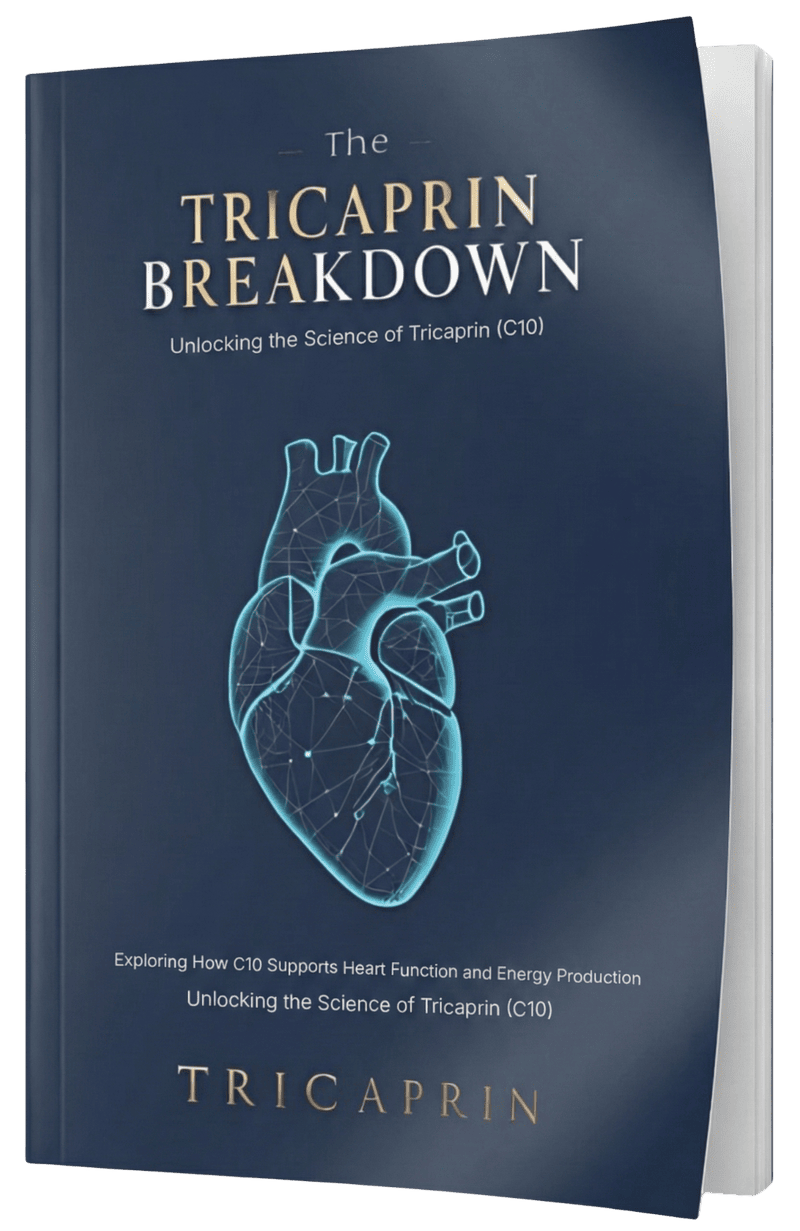
TriCaprin vs MCT Oil
A clear breakdown of how C10 differs from generic MCT blends.
⚛️
VS
💧
Side-by-Side Comparison
Understanding the key differences between pure Tricaprin and mixed MCT oils
| Feature | Tricaprin (C10) PURE | Generic MCT Oil |
|---|---|---|
| Molecular Form | Glycerol Tridecanoate Pure C10 triglyceride |
Mixed C8/C10 Variable ratio |
| Primary Function | Heart & metabolic support Cardiac pathways |
Fast ketone energy Quick ATP |
| Purity Level | 90–99% C10 Research grade |
Mostly C8 (70–95%) C10 is minor |
| Research Focus | Heart metabolism (TGCV) Osaka University |
Keto energy & general MCT effects |
| Absorption Rate | Moderate, sustained | Very fast (C8 dominant) |
| Digestive Tolerance | Smoother, fewer GI issues | May cause distress at high doses |
| Typical Use Case | Heart health, metabolic support | Keto, workouts, energy boost |
| Cost | Premium (special extraction) | Cheaper, mass-produced |
⚛️ Molecular Structures
C8 vs C10 molecule difference
C8
8 carbons
C10
10 carbons
📊 C8 vs C10 Key Differences
C8
Fastest ketones • GI sensitivity
C10
Sustained metabolism • Heart pathways
Absorption
C8: 15–30m
C10: 30–60m
Research Focus
C8: Energy
C10: TGCV
🥥 Why Coconut Oil ≠ C10
Coconut oil contains <10% C10. Most of it is actually C12 (lauric acid).
Tricaprin extracts raise C10 purity to 90–99% specifically for targeted research use.
<10%
C10 in Coconut
~50%
Lauric Acid
99%
Pure C10
Download the Full Research PDF
10-page comparison of Tricaprin, MCT & Coconut Oil
- Detailed C8 vs C10 comparison
- TGCV study explanation
- Metabolic pathways
- Supplement purity guide